From August 9 to 24, the first BioCamp took place at the Unizh Forge
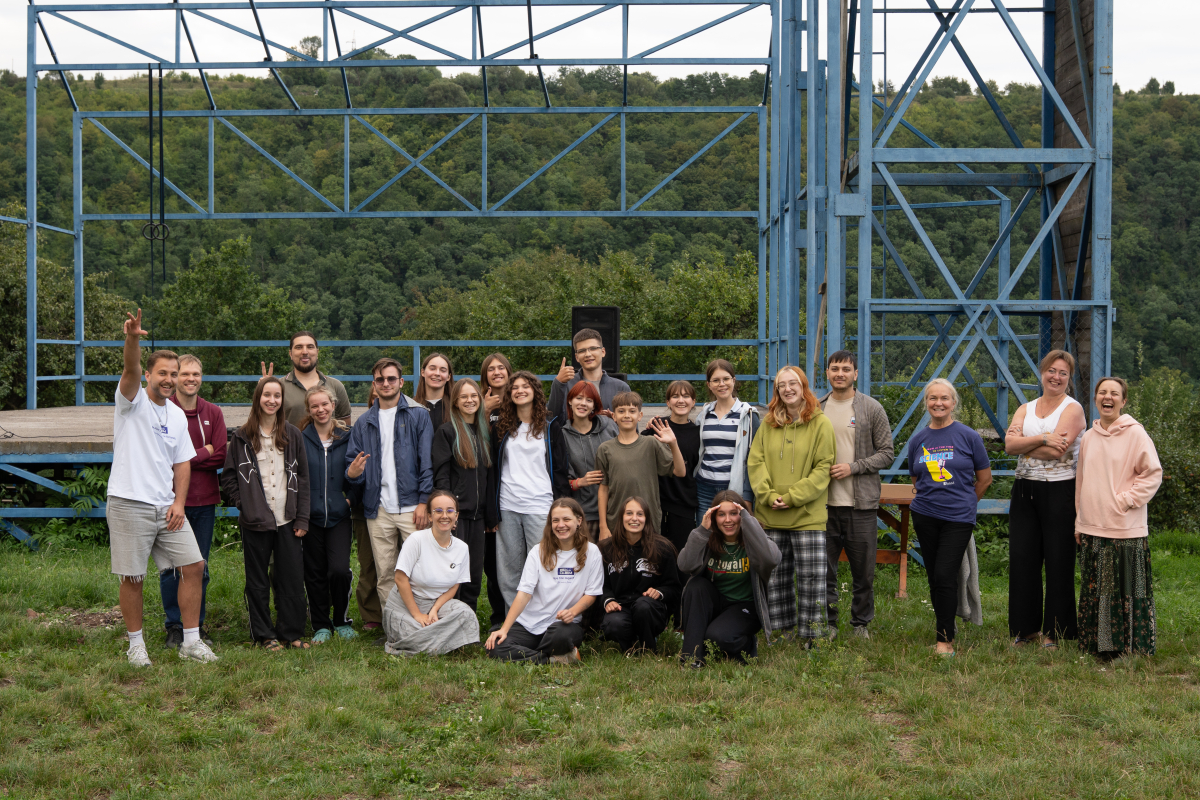
From August 9 to 24, the first BioCamp took place at the Unizh Forge. We brought together 20 students from different regions of Ukraine who are passionate about biology and immersed ourselves in the world of practical science.
The first days of the camp were dedicated to learning laboratory equipment and techniques, reproducing classical experiments such as protein concentration assays and plant pigment extraction. Once the students gained some experience, they moved on to larger and more exciting projects. Some of them included:
? Fruit fly Drosophila as a research model
Students learned to maintain fly cultures, cross different genetic lines, extract DNA, perform PCR and restriction analysis, and compare DNA fragments across lines. They also studied catalase activity in the flies — an enzyme that protects cells from reactive oxygen species, which contribute to aging. Students investigated how catalase activity changes with age, sex, or genetic differences.
? Exploring their own bodies
What could be more fascinating than the human body itself? Participants made blood smears, stained them, examined their own leukocytes under a microscope, and determined blood type using specific sera. They extracted DNA from buccal epithelial cells and, using RT-PCR analysis, explored aspects of their immune system regulated by the HLA system. They also measured cortisol, the stress hormone, in saliva via ELISA and studied how physical activity affected its levels — discovering a lot about themselves in the process.
? Peroxidase extraction from horseradish roots
Probably the most methodologically diverse project: students dug up roots, crushed and extracted peroxidase, then purified it using salting, dialysis, preparative ion-exchange chromatography, and gel filtration. Enzyme activity was monitored at every stage to preserve the protein, and purity was finally verified using electrophoresis. This project vividly showed how many steps are required to work with pure proteins in a lab and why biochemical reagents are so costly.
? Environmental research using chemical and microbiological methods
The Unizh Forge is located on the Dniester River. Students collected water samples upstream, near the base, and downstream. Using field reagent kits, they measured key ions for the aquatic ecosystem and performed microbiological analyses, counting microorganisms and identifying them with biochemical API systems. They also studied soil and air microbes at different sites. The results showed that human activity affects water chemistry and microbiology, but the river quickly mitigates this impact — a positive finding!
? Studying natural and artificial ecosystems
No biology camp is complete without fieldwork. Each day included outdoor research: students examined benthic invertebrates in the Dniester, discussed bioindicators, surveyed meadow plant species, estimated tree ages in the forest, and learned to collect mushrooms. They also studied insect diversity using traps and compared it with insects in a monoculture cornfield, noticing that monocultures increase insect numbers but decrease diversity.
These were truly intense and enriching days. The students left not only with new skills and knowledge but also with a sense of “biological brotherhood,” which we consider the greatest achievement of this camp.